.svg)

The Ultimate Pest Prevention Guide for New Hampshire Homeowners
The Ultimate Pest Prevention Guide for New Hampshire Homeowners
When most homeowners think about lawn care, they focus on fertilizer, watering, and mowing. But one of the biggest threats to a healthy lawn and comfortable outdoor space in New Hampshire is pest activity.
From ticks and mosquitoes to grubs, chinch bugs, and surface-feeding insects, pests can damage your lawn, disrupt outdoor living, and create ongoing problems throughout the growing season.
At Rockingham Turf Care, we help homeowners across New Hampshire protect their lawns and landscapes with proactive pest prevention strategies designed specifically for our region’s climate and seasonal conditions.
This long-form guide explains:
- Common lawn pests in New Hampshire
- When pest activity begins
- How irrigation affects pest pressure
- Best lawn care practices for prevention
- Signs of lawn insect damage
- When to treat your lawn
- How professional lawn care helps prevent infestations
Why Pest Prevention Matters in New Hampshire
New Hampshire lawns experience a wide range of seasonal conditions throughout the year. Wet springs, humid summers, drought stress, and fluctuating temperatures all create ideal environments for lawn pests and insects.
Many homeowners don’t notice a pest issue until visible lawn damage appears, but by then, recovery can become more difficult and expensive.
Preventative lawn care and pest control help:
- Protect grass roots from insect feeding
- Reduce lawn stress during summer heat
- Improve lawn density and resilience
- Prevent brown patches and thinning turf
- Reduce tick and mosquito populations
- Protect pets and family members outdoors
- Maintain healthier soil conditions
The healthiest lawns are often the lawns least vulnerable to pest problems.
Common Lawn Pests in New Hampshire
Grubs
Grubs are among the most damaging lawn pests in New Hampshire.
These beetle larvae feed beneath the soil surface and attack grassroots, preventing your lawn from absorbing water and nutrients properly.
Common signs of grub damage include:
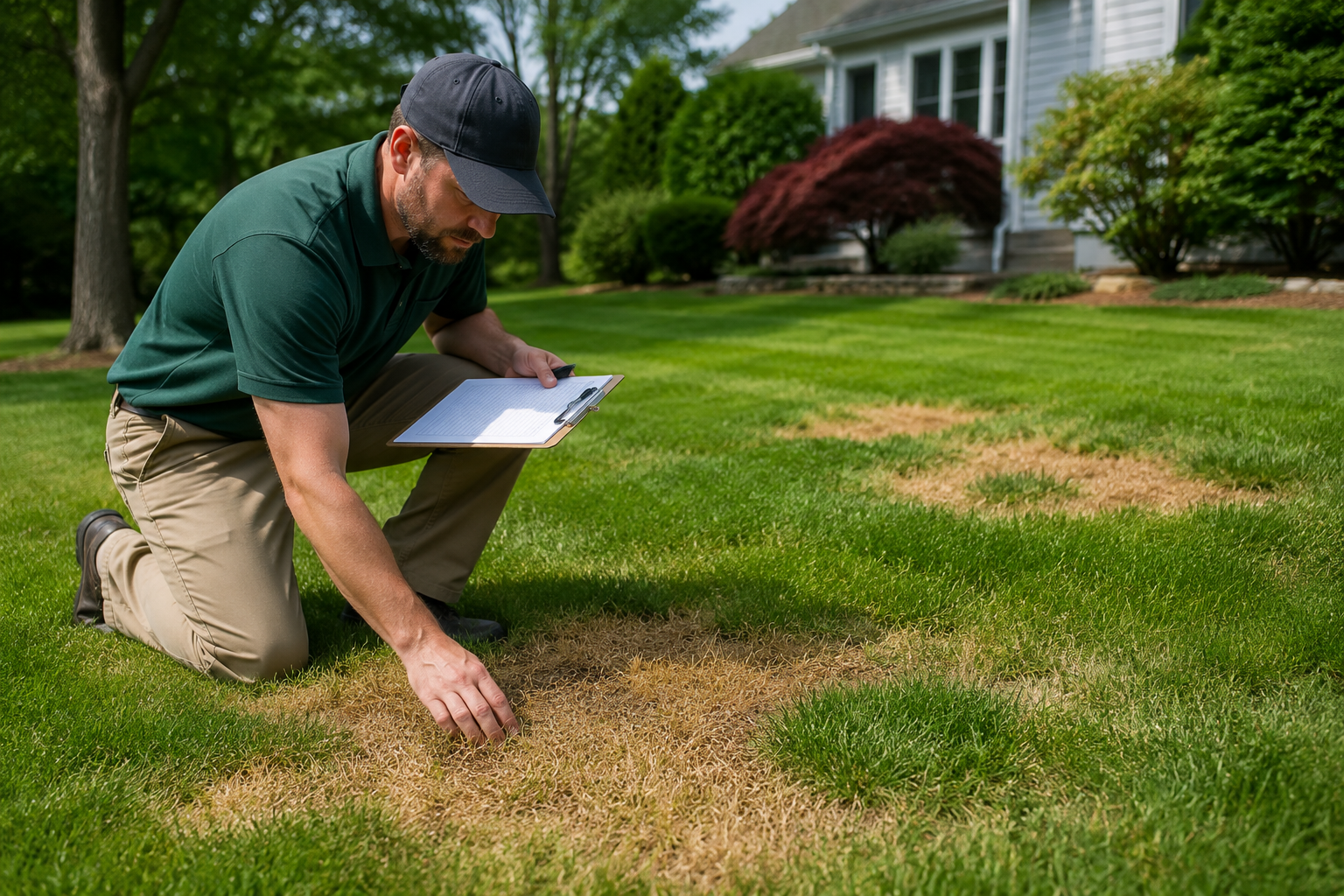
- Brown patches that worsen quickly
- Spongy turf
- Grass peeling up easily like carpet
- Increased animal digging from skunks or birds
- Thinning turf during summer stress
Preventative grub control treatments are most effective before major feeding activity begins.
Ticks
Tick populations continue to rise throughout New Hampshire, especially during warm and humid conditions.
Ticks thrive in:
- Tall grass
- Shaded lawn edges
- Moist landscapes
- Overgrown vegetation
- Wooded property lines
Because ticks can carry Lyme disease and other tick-borne illnesses, early-season tick prevention is critical for homeowners, children, and pets.
Reducing lawn moisture and maintaining proper mowing height can help reduce tick habitat around the property.
Mosquitoes
Mosquito activity increases significantly during rainy periods and humid summer weather.
Standing water is one of the biggest contributors to mosquito breeding around residential properties.
Common mosquito breeding areas include:
- Clogged gutters
- Bird baths
- Poor drainage areas
- Overwatered lawns
- Decorative containers
- Dense landscape beds
Professional mosquito treatments combined with proper irrigation management help reduce mosquito pressure throughout the season.
Chinch Bugs & Surface Insects
Although more common in warmer climates, surface-feeding insects can still create stress on New Hampshire lawns during hot summer periods.
Lawns already weakened by:
- Drought
- Improper mowing
- Poor irrigation
- Soil compaction
- Excessive heat stress
are far more susceptible to insect damage.
This is why proactive lawn health plays a major role in pest prevention.
The Role Irrigation Plays in Pest Prevention
One of the most overlooked components of pest prevention is proper lawn watering.
Improper irrigation creates ideal conditions for disease, insects, and lawn stress.
Overwatering Creates Pest Problems
Excess moisture can:
- Attract mosquitoes
- Encourage fungal disease
- Weaken root systems
- Increase insect activity near the soil surface
- Create humid environments pests prefer
Underwatering Weakens Turf
Drought-stressed lawns become thinner and weaker, making it easier for pests to attack.
Healthy lawns naturally resist insect pressure better because dense turf crowds out weak areas pests target.
Best Watering Practices for New Hampshire Lawns
For most New Hampshire lawns:
- Water deeply and infrequently
- Aim for about 1–1.5 inches of water per week
- Water early in the morning
- Avoid watering at night
- Avoid short, shallow watering cycles
Early morning irrigation allows the lawn to absorb moisture efficiently while reducing prolonged surface moisture that encourages pests and lawn disease.
Proper Mowing Helps Prevent Pest Problems
Mowing height has a direct impact on lawn health and pest resistance.
One of the best practices during summer is mowing your lawn taller.
For cool-season grasses common in New Hampshire:
- Maintain grass height around 3.5–4 inches
- Never remove more than one-third of the blade at once
- Keep mower blades sharp
Taller grass:
- Shades soil naturally
- Improves moisture retention
- Encourages deeper root growth
- Reduces heat stress
- Creates stronger turf capable of resisting pests
Short-cut lawns often experience more drought stress, weed pressure, and insect vulnerability.
Lawn Health Is the Foundation of Pest Prevention
Many homeowners search for:
- “How to prevent lawn pests”
- “Best lawn pest control in New Hampshire”
- “How to stop grubs naturally”
- “Mosquito prevention for lawns”
- “Tick control near me”
- “How to keep lawn healthy during summer”
The reality is that pest prevention starts with overall lawn health.
A thick, healthy lawn naturally:
- Recovers faster from stress
- Resists insect feeding
- Crowds out weeds
- Handles drought better
- Supports stronger root systems
That’s why fertilization, aeration, weed control, irrigation management, and pest control all work together.
When Should New Hampshire Homeowners Start Pest Prevention?
The best time to start pest prevention is before visible damage appears.
In New Hampshire:
- Tick activity often begins in spring
- Grub prevention begins before peak summer feeding
- Mosquito pressure rises during humid summer periods
- Lawn stress increases during heat and drought
Waiting until damage becomes visible often means recovery takes longer.
Preventative lawn care programs help homeowners stay ahead of seasonal pest pressure before infestations become severe.
Signs Your Lawn May Have a Pest Problem
Homeowners should watch for:
- Sudden brown patches
- Grass thinning
- Increased insect activity
- Mosquito swarms near the lawn
- Animal digging
- Turf lifting easily
- Uneven lawn color
- Excessive lawn stress despite watering
Early identification is one of the most important parts of effective lawn pest control.
Professional Lawn Care Makes a Difference
At Rockingham Turf Care, we build lawn care and pest prevention programs around New Hampshire’s unique seasonal conditions.
Our customized lawn care services help homeowners:
- Improve lawn density
- Reduce lawn stress
- Strengthen root systems
- Prevent weed pressure
- Protect against lawn-damaging insects
- Improve irrigation efficiency
- Maintain healthier outdoor spaces all season long
Because every property is different, timing and treatment strategies matter.
Protect Your Lawn Before Pest Problems Start
The best pest prevention strategy is proactive lawn care.
Healthy lawns are more resilient, recover faster, and provide better protection against insects, weeds, drought stress, and seasonal damage.
If you’re noticing lawn stress, insect activity, or simply want to stay ahead of pest problems this season, professional lawn care can help protect your property before issues escalate.
Contact Rockingham Turf Care today to learn more about lawn care, pest prevention, grub control, tick control, and seasonal lawn health services for New Hampshire homeowners.