.svg)

Lawn Fungus in New Hampshire: Why Brown Patches Appear in Summer (And Why Most Lawns Recover)
Lawn Fungus in New Hampshire: Why Brown Patches Appear in Summer (And Why Your Lawn Will Likely Recover)
If you've ever walked outside during a hot, humid New Hampshire summer and suddenly noticed brown patches spreading across your lawn, you're not alone.
In fact, one of the most common phone calls we receive during July and August starts something like this:
"My lawn was green last week. Now there are brown spots everywhere. Is my lawn dying?"
It's a reasonable concern. After investing time, money, and effort into your lawn, seeing discoloration appear seemingly overnight can be frustrating.
The good news is that most summer lawn diseases are far more alarming than they are dangerous.
In many cases, fungal diseases are primarily cosmetic, affecting the appearance of the grass blade rather than causing permanent damage to the lawn itself. While treatment is sometimes necessary, many lawns recover naturally once environmental conditions improve.
Understanding why fungal diseases occur, what they look like, and how to properly respond can help homeowners avoid unnecessary panic and make better lawn care decisions throughout the summer.
Why Summer Creates the Perfect Environment for Lawn Fungus
To understand lawn disease, it helps to think about what fungi need to survive.
Most turf diseases thrive when three conditions come together:
Moisture
Fungi require moisture to reproduce and spread. Morning dew, frequent rainfall, irrigation, and high humidity all create favorable conditions.
Warm Temperatures
Many common lawn diseases become active when daytime temperatures rise into the 70s and 80s while nighttime temperatures remain warm.
Stressed Turf
Grass that is stressed by heat, drought, soil compaction, or heavy traffic is more susceptible to disease pressure.
When these three factors overlap—as they often do during New Hampshire summers—fungal outbreaks become much more common.
This is why disease activity often spikes after periods of:
- Multiple days of rain
- Warm overnight temperatures
- Extended humidity
- Heavy morning dew
- Sudden temperature swings
Homeowners often assume they caused the problem, when in reality, the weather is usually the biggest contributing factor.
Why Lawn Fungus Seems to Appear Overnight
One of the most confusing things about lawn diseases is how quickly symptoms seem to develop.
A lawn can appear healthy on Friday and look completely different by Monday morning.
The reason is that fungal pathogens are often present in lawns all the time. They're simply waiting for favorable conditions.
Once humidity and temperature align, disease activity can accelerate rapidly.
This doesn't mean the lawn suddenly became infected overnight. It simply means the symptoms have finally become visible.
The Three Most Common Summer Lawn Diseases We See
Brown Patch
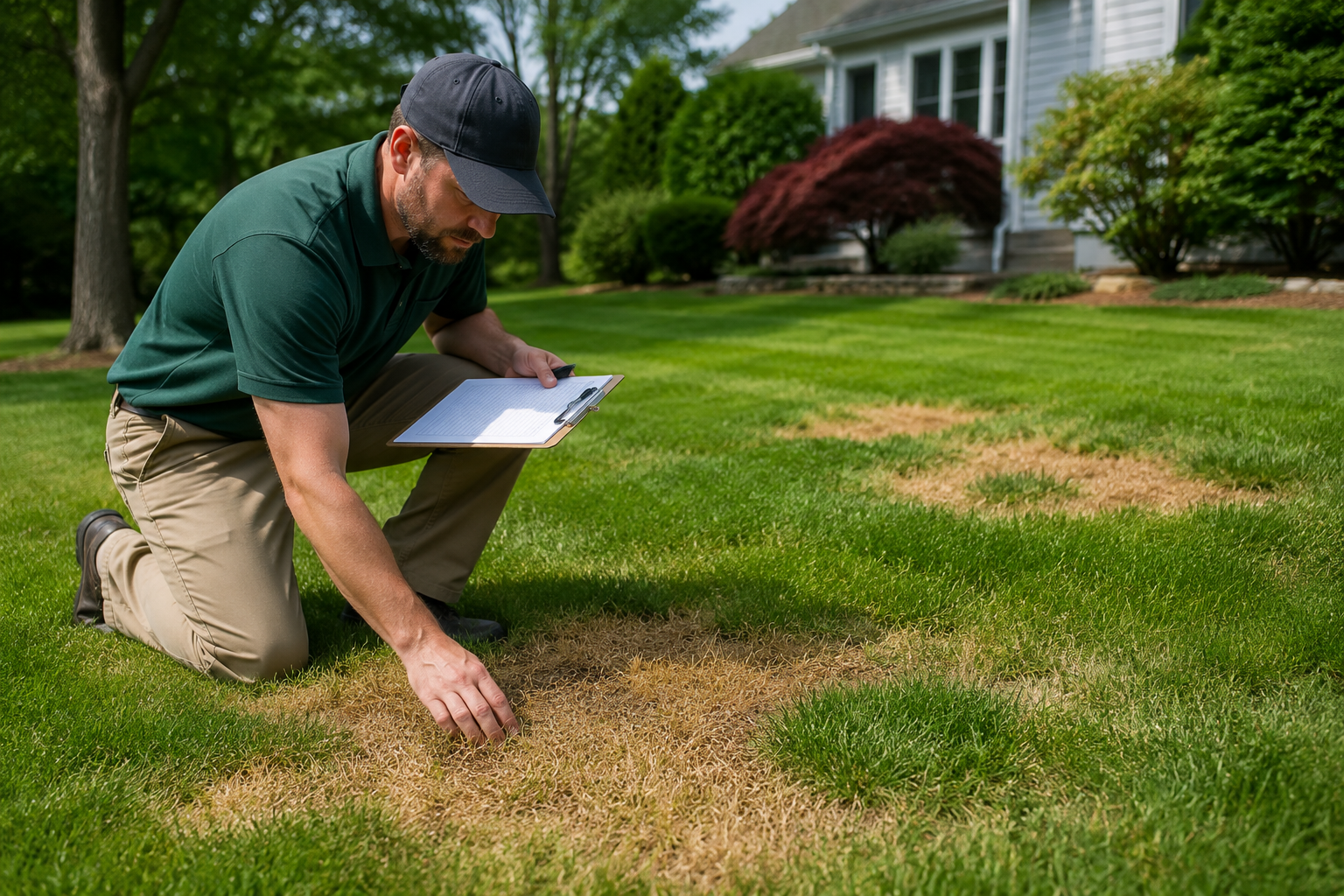
Brown Patch is often the disease homeowners notice first because it creates large, obvious patches.
Symptoms include:
- Circular brown areas
- Darker rings around patch edges
- Thinning turf
- Rapid appearance after humid weather
Brown Patch is especially common during periods of high humidity and warm nights.
While it may look severe, established lawns usually recover once temperatures cool and active growth resumes.
Dollar Spot
Dollar Spot creates dozens—or even hundreds—of small straw-colored spots throughout the lawn.
From a distance, the lawn may appear faded or drought-stressed.
Homeowners often mistake Dollar Spot for:
- Underwatering
- Grub damage
- Fertility issues
- Heat stress
While visually frustrating, Dollar Spot rarely causes long-term turf loss.
Red Thread
Red Thread is especially common during periods of fluctuating weather.
It often appears as:
- Pink patches
- Reddish strands on grass blades
- Areas of uneven discoloration
Red Thread tends to affect appearance far more than plant health and is generally one of the least concerning lawn diseases we encounter.
Common Mistakes Homeowners Make When They See Fungus
Applying More Water
Many homeowners see brown patches and immediately assume the lawn needs more water.
Unfortunately, excess moisture often makes fungal diseases worse.
The better approach is identifying whether the problem is drought stress or disease before adjusting irrigation.
Mowing Too Short
Short grass may look tidy, but it increases stress on the lawn during summer.
Taller turf develops deeper roots, retains moisture more effectively, and generally recovers faster from disease pressure.
Applying Store-Bought Products Without Diagnosis
Not all brown patches are caused by fungus.
Heat stress, drought, grubs, pet damage, soil issues, and fungal diseases can all look similar.
Treating the wrong problem often wastes time and money.
Can Lawn Fungus Kill Your Lawn?
This is the question every homeowner wants answered.
The answer is:
Usually not.
The vast majority of lawn diseases affecting New Hampshire lawns damage grass blades rather than the crown or root system.
Think of it like a tree losing its leaves during a stressful season. The appearance changes dramatically, but the plant itself remains alive.
Most lawns recover once:
- Temperatures moderate
- Humidity decreases
- Growth conditions improve
- Fall growing season arrives
This is why many lawns that look rough in August look fantastic by October.
How Professional Lawn Care Helps Reduce Disease Pressure
While no lawn can be completely protected from every disease, professional lawn care programs help create stronger, healthier turf that is better equipped to handle stress.
This includes:
- Proper fertilization
- Balanced nutrient management
- Improved soil health
- Weed control
- Monitoring for disease activity
- Watering recommendations
- Aeration and overseeding
Healthy lawns simply recover faster.
What Homeowners Should Focus on Right Now
If you're seeing fungal activity this summer, focus on the things you can control:
✓ Water early in the morning
✓ Mow at 3.5–4 inches
✓ Avoid excessive nitrogen during heat stress
✓ Reduce traffic on affected areas
✓ Monitor symptoms rather than panic
✓ Contact a lawn care professional if symptoms continue spreading
Remember, most summer fungal diseases are temporary setbacks—not permanent lawn damage.
The Good News: Fall Is Nature's Reset Button
One of the reasons cool-season lawns perform so well in New Hampshire is that they receive a second growing season in the fall.
As temperatures cool, grass shifts back into active growth and begins repairing much of the damage accumulated during summer.
Many fungal symptoms disappear entirely as new grass blades replace older, damaged tissue.
For homeowners, that means today's brown patches are often tomorrow's healthy lawn.
Concerned About Brown Patches in Your Lawn?
At Rockingham Turf Care, we help homeowners throughout Southern New Hampshire diagnose lawn issues, reduce disease pressure, and maintain healthy turf through every season. If you're noticing unusual discoloration, patching, or thinning, our team can help determine what's happening and recommend the best path forward.